Mouse Removal and Control in Tucson
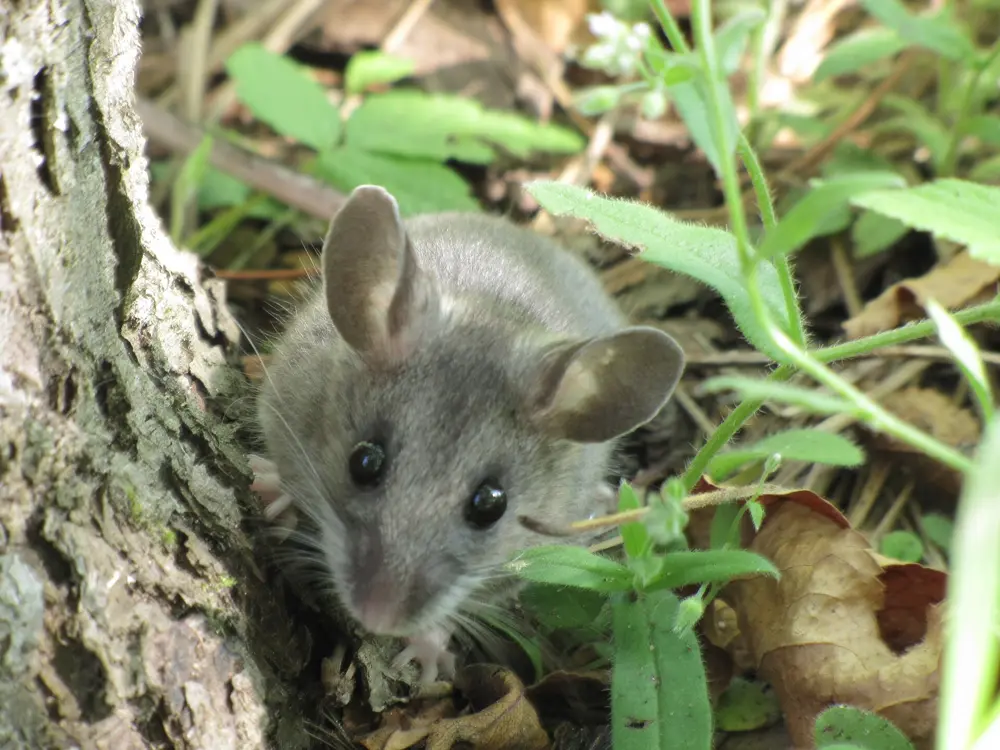
First thing to figure out is which mouse you've got, because Tucson has two that show up in houses. House mice are the plain gray-brown, small-eared ones, the same as the ones back east, and they turn up in kitchens, pantries and garages, mostly in older parts of town and around businesses. Deer mice are the desert-edge locals: brown on top, bright white belly, white feet, big eyes. They settle into sheds, casitas, storage rooms and cabins out in the foothills and the outlying areas.
It matters because deer mice carry Sin Nombre hantavirus, and Arizona health officials do warn people about cleaning up after them. That's no reason to panic. It's a reason not to sweep out a closed-up casita with a broom. Our droppings cleanup guide follows the CDC steps.
Mouse, or something bigger?
Mice leave a different kind of mess than pack rats. You'll notice things like:
If the droppings are big and there are cactus bits lying around, that's a pack rat, not a mouse. If they're spindle-shaped and up in the attic, think roof rats.
- Small, pointed droppings in drawers, cabinets and along baseboards
- A chewed cereal box or a torn bag of dog food in the garage
- Shredded paper or fabric tucked into storage boxes
- Scratching in the wall or ceiling after dark
- A musty smell when you open a casita that's been shut all summer
The pencil-sized gaps they use
A mouse fits through a gap about the width of a pencil. In Tucson houses that usually means the rubber seal under the garage door, the hole where the AC line goes through the stucco, open weep holes at the bottom of a block wall, and casita or storage room doors that never quite latch. Honestly, most mouse problems in older homes come back to the same few gaps.
The technician asks where you've seen droppings, then checks the kitchen, pantry, water heater closet and garage. Outside, they walk the house looking for those openings. Snap traps go along walls and behind appliances, where mice run, and a follow-up visit checks the catch. Once things quiet down, the gaps get closed. If the house has a lot of them, ask about whole-house sealing. In Tucson the water heater closet is a favorite spot: warm, dark, and the pipes come through the wall with a gap around them. Glue traps are a bad idea around here, by the way. They catch lizards and the occasional bird.
| Got questions about what's living in your yard, attic or car? We're glad to talk it through. | (520) 231-7565 |
Midtown kitchens and desert-edge garages
House mice are a steady call in the older homes and detached garages around midtown and Sam Hughes, where decades of settling have loosened up the door frames, and in Casas Adobes houses off Oracle Rd. that still have their original garage doors. Small shops and restaurants on the west side call about them too.
Deer mice are more of a fall thing, out at the edges. Garages backing to open space in Oro Valley, storage rooms in Vail and Rita Ranch. When October nights drop, they come looking for a warm box to nest in. If you're the one cleaning up, air the room out for 30 minutes, wear rubber gloves, soak the droppings with a 1 to 9 bleach mix for five minutes, then wipe and bag. For a casita that's really bad, a professional cleanup is worth it.
Questions We Get
How do I tell a deer mouse from a house mouse?
Deer mice have a brown back, a bright white belly and white feet, and the tail is dark on top and white below. House mice are plain gray-brown all over. When in doubt, clean up like it's a deer mouse.
Will mice leave on their own once it warms up?
Not usually. If there's food and a warm spot, they stay and breed. Trapping plus sealing is what ends it.
I've only seen one mouse. Is that a big deal?
If you're seeing it regularly, there are more. Mice breed fast when food and shelter are easy.
Serving Catalina Foothills, Oro Valley, Marana, Tanque Verde and East Side, Midtown and Sam Hughes, Vail, Sahuarita and Green Valley, Rita Ranch, Casas Adobes, South Tucson and West Side.